How to Use Olive Oil on Pizza: Timing, Types, and Amounts
Discover how to elevate your pizza with olive oil. Learn what EVOO is and the best types, timing, and amounts for a delicious crust and flavorful toppings.
Yes, olive oil belongs on pizza. The rule is simple: match the timing and oil type to what you want the oil to do. Add it to the dough for a softer, more extensible crust. Apply it before baking to marry ingredients and protect moisture. Drizzle it after baking to deliver the aroma and flavor you actually taste.
What Is EVOO?
EVOO stands for extra virgin olive oil — the highest, least-processed grade of olive oil, cold-pressed from olives without heat or chemical refining. On pizza, EVOO is the oil pizzaiolos reach for because it keeps its flavour, aroma and phenolic (antioxidant) compounds intact, unlike refined olive oil, which is processed and largely flavourless. So when a recipe or a pizzeria menu says "finished with EVOO," it means this cold-pressed, full-flavour oil — used in the dough for texture, before baking to help toppings melt together, and after baking for the aroma you actually taste.
- In the dough: softens gluten, increases extensibility, produces a more tender crumb
- Before baking: unifies toppings, seals moisture, promotes even browning
- After baking: preserves volatile aromatics and phenolic compounds that heat would otherwise destroy
The Neapolitan Pizza TSG tradition calls for extra virgin olive oil applied in a spiral before baking. Pizzaiolo Salvatore Salvo uses a small drizzle before the oven and a second, more expressive drizzle immediately after, totaling a moderate amount on a Marinara.
Key Takeaways
Extra virgin olive oil improves pizza at every stage, but timing, amount, and oil type determine whether it adds flavor and texture or just grease.
| Point | Details |
|---|---|
| Match timing to purpose | Use oil in dough for texture, before baking for cohesion, and after baking for aroma. |
| Use the right amount | 4–6 g before baking; 5–8 g for finishing; 1–2% of flour weight when adding to dough. |
| Two oils beat one | A balanced EVOO for cooking and a high-phenolic monovarietal for finishing delivers better results than one bottle for both. |
| Phenolics survive better in quality oil | Research on Ottobratica EVOO shows higher-phenolic oils retain more antioxidants and resist oxidation after pizza cooking. |
| Doughdorks dough is built for this | Doughdorks’ 48-hour fermented dough balls already include EVOO, giving you the right base for every drizzle technique in this guide. |
Table of Contents
- When and why should you use olive oil on pizza?
- How olive oil changes crust texture and bake performance
- Which olive oil should you use for pizza?
- How to apply olive oil: amounts, tools, and technique
- What does research say about phenolics and heat stability?
- Common mistakes with olive oil on pizza
- Quick recipe examples: Marinara, Margherita, and white pizza
- The part most guides skip
- Doughdorks makes the dough worth drizzling on
- Sources
When and why should you use olive oil on pizza?
The three applications serve genuinely different purposes, and confusing them is where most home cooks go wrong.
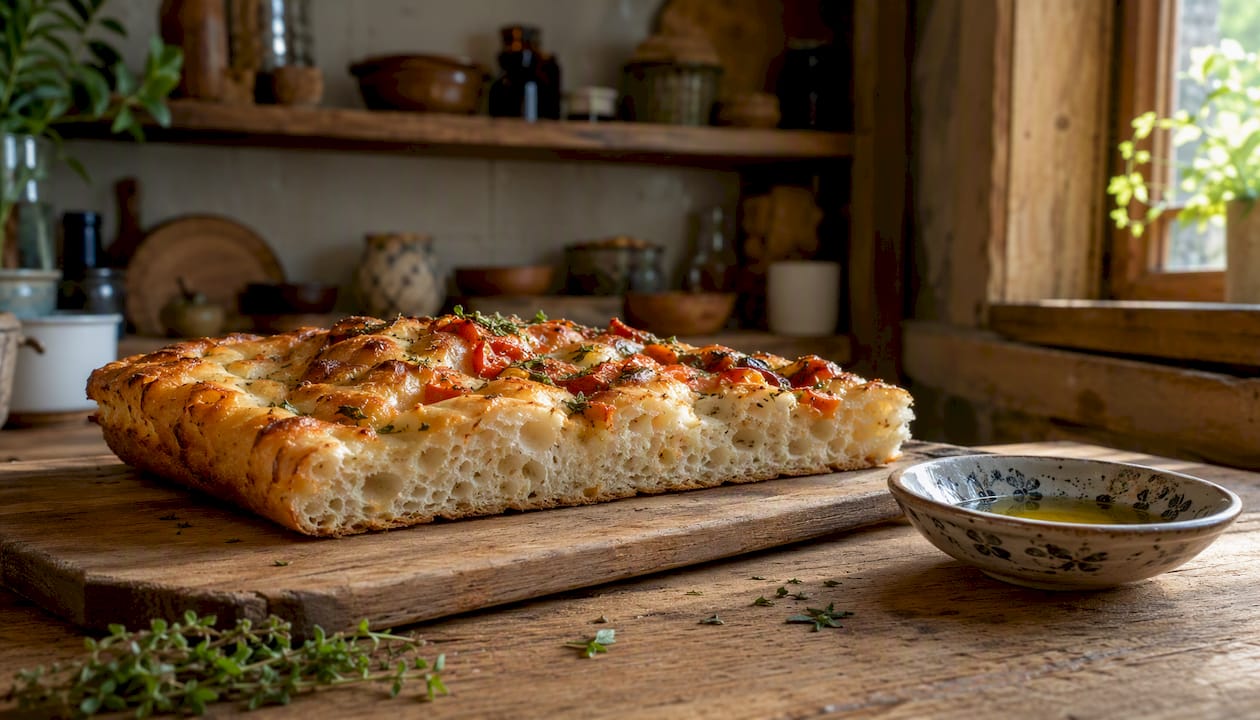
In the dough is about structure. Oil coats gluten strands and limits how tightly they bond, which gives you a more pliable, easier-to-stretch dough and a crumb that bites tender rather than chewy. If you’ve ever made a pan pizza that came out soft and almost focaccia-like, oil in the dough is a big part of why.
Before baking is about cohesion. A light drizzle over assembled toppings — applied in a spiral so it reaches the edges — helps ingredients melt together under high heat rather than sitting separately on the surface. The AVPN-endorsed practice specifically calls for this spiral technique to maintain topping moisture. A balanced, mild EVOO works best here; you want the oil to do a structural job, not compete with the toppings.
After baking is pure flavor. Heat degrades aromatic compounds and some phenolics, so finishing with a fresh drizzle on warm pizza preserves the grassy, peppery, or fruity notes that make a great EVOO worth buying. This is where you use your best bottle.
- Softer crust goal → oil in the dough
- Glossy, unified toppings → drizzle before baking
- Aromatic, restaurant-quality finish → drizzle after baking
- Maximum impact → double drizzle (before and after), the method top pizzaioli use
Neapolitan and white pizzas lean heavily on the finishing drizzle. Pan and thick-crust styles benefit most from oil in the dough. Thin-crust pizzas often skip dough oil entirely and rely on a light pre-bake drizzle.
How olive oil changes crust texture and bake performance
Oil’s effect on dough is mechanical before it’s chemical. Fat molecules wrap around gluten strands and physically interrupt the protein network, which is why even small amounts soften the crumb and increase extensibility. The trade-off is chew: a more extensible dough stretches beautifully but produces a less chewy, more tender bite.
Baker’s percentages give you a practical handle on this. At 1–2% oil (roughly 3–6 g in a 300 g dough ball), you get a modest softening effect with most of the chew intact. That’s the range most Neapolitan-style recipes use. Push to higher oil percentages and you’re in pan-pizza or cracker-crust territory where the crumb becomes noticeably tender and crumbly. A standard home recipe like Florence Fabricant’s NYT dough uses a small amount of olive oil mixed into the dough, corresponding to a low percentage consistent with softening effects.
Timing during mixing matters more than most recipes acknowledge. Adding oil at the very start, before gluten has begun to form, limits how strong the network can get. Professionals typically add oil after the initial hydration phase, once the flour and water have come together and gluten development has started. That sequence gives you the extensibility benefit without sacrificing structure.
- 1–2% oil (3–6 g per 300 g dough): mild softening, good extensibility, Neapolitan-style chew retained
- 5–10% oil: tender, short crumb; suited to pan or cracker-style crusts
- Add oil after initial hydration to protect gluten development
Pro Tip: If you want a Neapolitan-style chew at home, keep oil in the dough at or below 2% and add it after the flour and water have combined. For a softer pan crust, go up to 5% and mix it in from the start.
Which olive oil should you use for pizza?
The short answer: use extra virgin for finishing, and a balanced EVOO or refined oil for high-heat cooking. The longer answer involves matching intensity to what’s on the pizza.
EVOO, refined, and specialty pizza oils
Extra virgin olive oil (EVOO) is cold-pressed and retains its phenolic compounds, flavor, and aroma. It’s the right choice for finishing drizzles and for dough where flavor matters. Refined olive oil has been processed to remove defects and most flavor; it has a higher smoke point and is more neutral, making it acceptable for high-heat cooking but pointless as a finishing oil. Specialty pizza oils like Brightland Pizza Oil are EVOOs formulated with added flavor notes (garlic, herbs, chili) specifically for pizza finishing.
Matching intensity to toppings
Choosing EVOO by intensity rather than brand is the move professional pizzerias make. The pairing logic is straightforward:
- Mild, buttery oils: delicate white pizzas, fresh mozzarella, burrata
- Fruity, medium-intensity oils: Margherita, vegetable toppings, prosciutto
- Peppery, robust oils: Marinara, anchovies, bitter greens, aged cheeses
Monovarietal vs. blends
A monovarietal oil comes from a single olive cultivar and tends to have a more pronounced, specific flavor profile. The Ottobratica cultivar from Calabria is a research example worth knowing: a peer-reviewed study found it retained higher polyphenol levels and showed better oxidation stability after pizza cooking compared with commercial blended or refined oils. For finishing, a high-phenolic monovarietal like Ottobratica delivers both flavor and stability. For baking, a balanced blend is usually the better call — consistent flavor, lower cost, and no wasted aromatics in the oven.
The Neapolitan TSG tradition doesn’t mandate a specific cultivar, but it does require extra virgin olive oil. That’s the floor, not the ceiling.
How to apply olive oil: amounts, tools, and technique
Precision here separates a professional result from a greasy mess.
Amounts by application
| When to apply | Purpose | Oil type | Typical amount | Best for |
|---|---|---|---|---|
| In the dough | Texture, extensibility | EVOO or refined | 1–2% of flour weight | Neapolitan, pan |
| Before baking | Ingredient cohesion, moisture | Balanced EVOO | 4–6 g per pizza | All styles |
| After baking | Aroma, flavor finish | High-phenolic EVOO | 5–8 g per pizza | Neapolitan, white |
| Double drizzle | Both cohesion and finish | Two oils or one balanced | 8–12 g total | Marinara, Margherita |
Tools and motion
A small spouted oil can gives you the most control for a spiral drizzle. A pastry brush works well before baking when you want even coverage on the crust edge. For finishing, a spoon or squeeze bottle lets you place the oil precisely. Avoid pouring straight from a large bottle — you’ll over-oil the center every time.
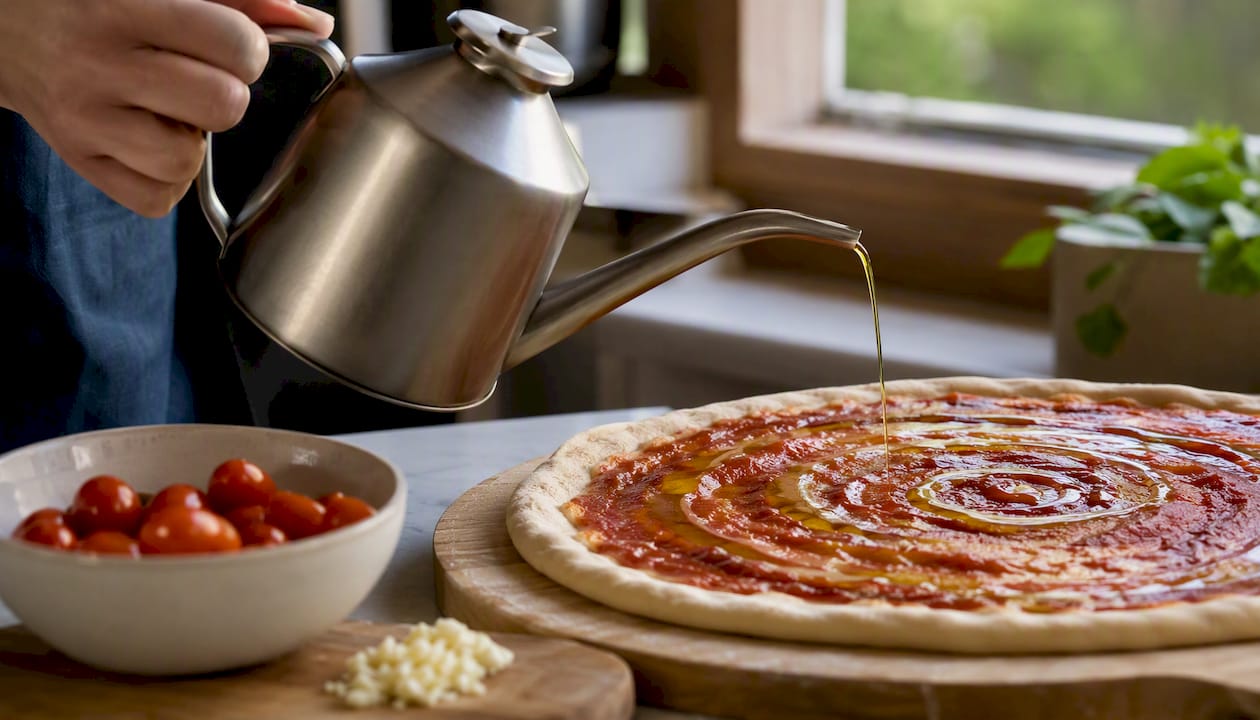
The spiral motion before baking isn’t decorative. Starting from the center and moving outward distributes oil evenly and keeps the tomato sauce from drying out at the edges under high heat.
The double-drizzle technique
Salvatore Salvo’s double-drizzle method uses a small balanced drizzle before the oven (4–5 g) to marry ingredients, then a second, more expressive drizzle immediately after baking (5–6 g) to deliver aroma while the pizza is still hot. The heat from the crust gently warms the finishing oil without cooking it, releasing its aromatics without destroying them.
Pro Tip: Keep two bottles on your pizza station: a mid-range balanced EVOO for before the oven, and your best peppery or fruity monovarietal for the finish. The difference in the final slice is immediate.
What does research say about phenolics and heat stability?
The science here is more specific than most pizza articles let on. A peer-reviewed study on Neapolitan Pizza TSG tested different oil types applied to pizza toppings and measured oxidation markers — peroxide value, p-anisidine, and TOTOX — after cooking. The monovarietal Ottobratica EVOO produced lower oxidation markers and retained higher polyphenol content post-bake compared with commercial blended or refined oils.
What this means practically: phenolics are the compounds responsible for EVOO’s peppery bite and much of its health benefit. They also act as natural antioxidants, slowing lipid oxidation during cooking. An oil with higher phenolic content going into the oven comes out with more of those compounds intact.
For home cooks, the takeaway is this: if you’re adding oil before baking, a higher-phenolic EVOO holds up better than a refined or low-quality oil. For finishing, phenolic content matters even more because you’re consuming the oil without any heat treatment at all.
One caveat: this is a single study in a specific Neapolitan TSG context. The findings are directionally useful, but they shouldn’t be read as a universal guarantee across every oven temperature and topping combination.
Common mistakes with olive oil on pizza
Most problems come down to too much oil, the wrong oil for the job, or bad timing.
- Over-oiling before baking: toppings slide, the crust steams instead of crisps, and the base goes soggy. Stick to 4–6 g and use a spiral motion to distribute it.
- Using a finishing oil for baking: a peppery, aromatic monovarietal loses most of what makes it worth buying once it hits a 500°F oven. Save it for after.
- Smoking oil: if your oil smokes before the pizza is done, you’re either using too much or using a low-quality EVOO with a lower smoke point. A refined olive oil or a higher-quality EVOO handles oven heat better.
- Adding oil too early in mixing: this limits gluten development. Add it after the flour and water have combined, not at the start.
- Ignoring freshness: olive oil goes rancid. A bottle that smells waxy or flat will make your pizza taste the same way. Most EVOOs are best within 12–18 months of harvest; check the harvest date on the label, not just the best-by date.
For dough texture issues: if your crust is too dense, reduce oil percentage or check mixing timing. If it tears when stretching, you may need more oil or longer fermentation. Sogginess under toppings usually points to over-oiling before baking or underbaking, not the oil type itself.
Quick recipe examples: Marinara, Margherita, and white pizza
1. Marinara (double drizzle)
- Spread tomato sauce, add garlic, oregano, and a pinch of salt.
- Drizzle 5 g of balanced EVOO in a spiral before baking.
- Bake at maximum oven temperature (ideally 500–550°F) for 6–10 minutes.
- Immediately after pulling from the oven, add a second drizzle of 5–7 g of a peppery monovarietal EVOO.
The Marinara is the pizza where oil is most visible as an ingredient, not just a condiment. Salvo’s total of 10–12 g for this style reflects that.
2. Margherita
- Spread tomato sauce, add torn fior di latte or fresh mozzarella.
- A light drizzle of 4–5 g of a fruity, medium-intensity EVOO before baking.
- After baking, a small finishing drizzle (3–4 g) of the same or a slightly more expressive oil.
- Add fresh basil after the oven, not before.
For Margherita, oil in the dough is optional. If you’re working with a 48-hour fermented Neapolitan dough, the fermentation already builds extensibility; keep dough oil at 1–2% or skip it entirely.
3. White pizza with garlic oil
- Combine 3–4 tablespoons of mild EVOO with 2–3 thinly sliced garlic cloves. Warm gently over low heat for 5 minutes — do not fry. Let cool.
- Brush the garlic oil over the stretched dough as the base (no tomato sauce).
- Add toppings: ricotta, mozzarella, fresh thyme, or whatever suits.
- Bake, then finish with a few drops of a grassy, green EVOO.
The garlic oil base replaces both sauce and pre-bake drizzle in one step.
Variations by style:
- Pan pizza: add 5–8 g of oil directly to the pan before placing the dough; the bottom fries slightly and crisps.
- Thin-crust: skip dough oil; a very light pre-bake drizzle (3–4 g) is enough.
- Home oven Neapolitan: use a pizza steel or stone, preheat for at least 45 minutes, and apply the finishing drizzle the moment the pizza comes off the steel.
The part most guides skip
Most olive oil advice for pizza treats the finishing drizzle as optional garnish. It isn’t. On a Neapolitan pizza, the post-bake drizzle is where the oil actually functions as a flavor ingredient rather than a cooking medium. The difference between a pizza finished with a flat, generic EVOO and one finished with a fresh, high-phenolic monovarietal is not subtle.
The other thing worth saying: one bottle is almost never the right answer. A balanced, affordable EVOO for the dough and pre-bake work, and a better, more expressive oil for finishing. That two-bottle approach is what professional pizzaioli actually use, and it costs less than buying one expensive bottle and burning half of it in the oven.
Tasting your oil before it goes on the pizza matters too. If it doesn’t taste good straight from a spoon, it won’t improve on the pizza. Freshness and quality at the source are the variables that actually move the needle.
Doughdorks makes the dough worth drizzling on
If the oil is the finishing touch, the dough is the foundation. Doughdorks’ 48-hour fermented Neapolitan dough balls are made with Italian 00 flour, fresh yeast, and extra virgin olive oil already in the mix, so the texture and extensibility work is done before you even open the bag. That means your pre-bake and finishing drizzles go on a dough that’s already built for them.

For home cooks who want to skip the mixing entirely and go straight to the fun part, Doughdorks also offers pre-cooked Neapolitan pizza bases that are ready for toppings and a finishing drizzle. Every technique in this article works on either format. Order your dough balls or bases at Doughdorks and put the oil to work.
Sources
- Effect of Oil Type Used in Neapolitan Pizza TSG Topping on Its Physical, Chemical, and Sensory Properties
- How Extra Virgin Olive Oil Elevates Traditional Neapolitan Pizza
- Oil in Pizza Dough: How Fat Affects Texture and Flavor
- Olive Oil and Pizza: When, Why, and How to Use It - Pizzata
- Florence Fabricant’s basic pizza dough (NYT Cooking)
- The best extra virgin olive oils (Serious Eats)
Recommended
- Anchovies on Pizza: What Home Cooks Need to Know
- Best Cheeses for Pizza: A Home Cook’s Guide
- Prosciutto on Pizza: Easy Recipes and Tips for Home Cooks
- The Best Mozzarella for Pizza: A Home Cook’s Guide
PIZZA NIGHT, SORTED
Build the pizza with proper Italian ingredients
Shop Italian toppings, then add 48-hour fermented dough balls from Dorset for a complete pizza night.
-
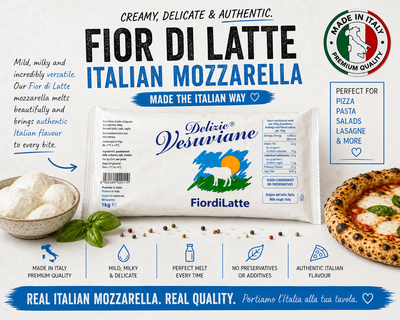 Fior di Latte Mozzarella for Pizza – 1kg
£12.59
Fior di Latte Mozzarella for Pizza – 1kg
£12.59
-
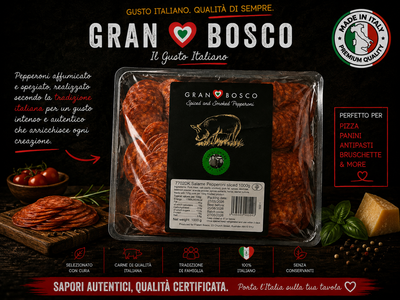 Gran Bosco, Smoked Sliced Pepperoni – 1kg
£18
Gran Bosco, Smoked Sliced Pepperoni – 1kg
£18
-
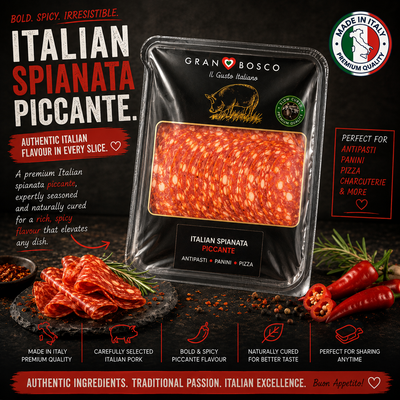 Gran Bosco - Italian Spianata Piccante 250g
£8.10
Gran Bosco - Italian Spianata Piccante 250g
£8.10
Handmade in Dorset • Free UK delivery over £50 • Free proofing pot with every dough ball