The Best Mozzarella for Pizza: A Home Cook's Guide
Discover the best mozzarella for pizza. Learn why low-moisture whole milk mozzarella is ideal for home cooking and get expert tips!
For most home pizzas, low-moisture whole-milk mozzarella is the right default. It has a moderate moisture content by FDA definition, melts into a glossy, elastic layer, browns without turning rubbery, and holds up through a typical home-oven bake without flooding your crust.
Three quick exceptions worth knowing:
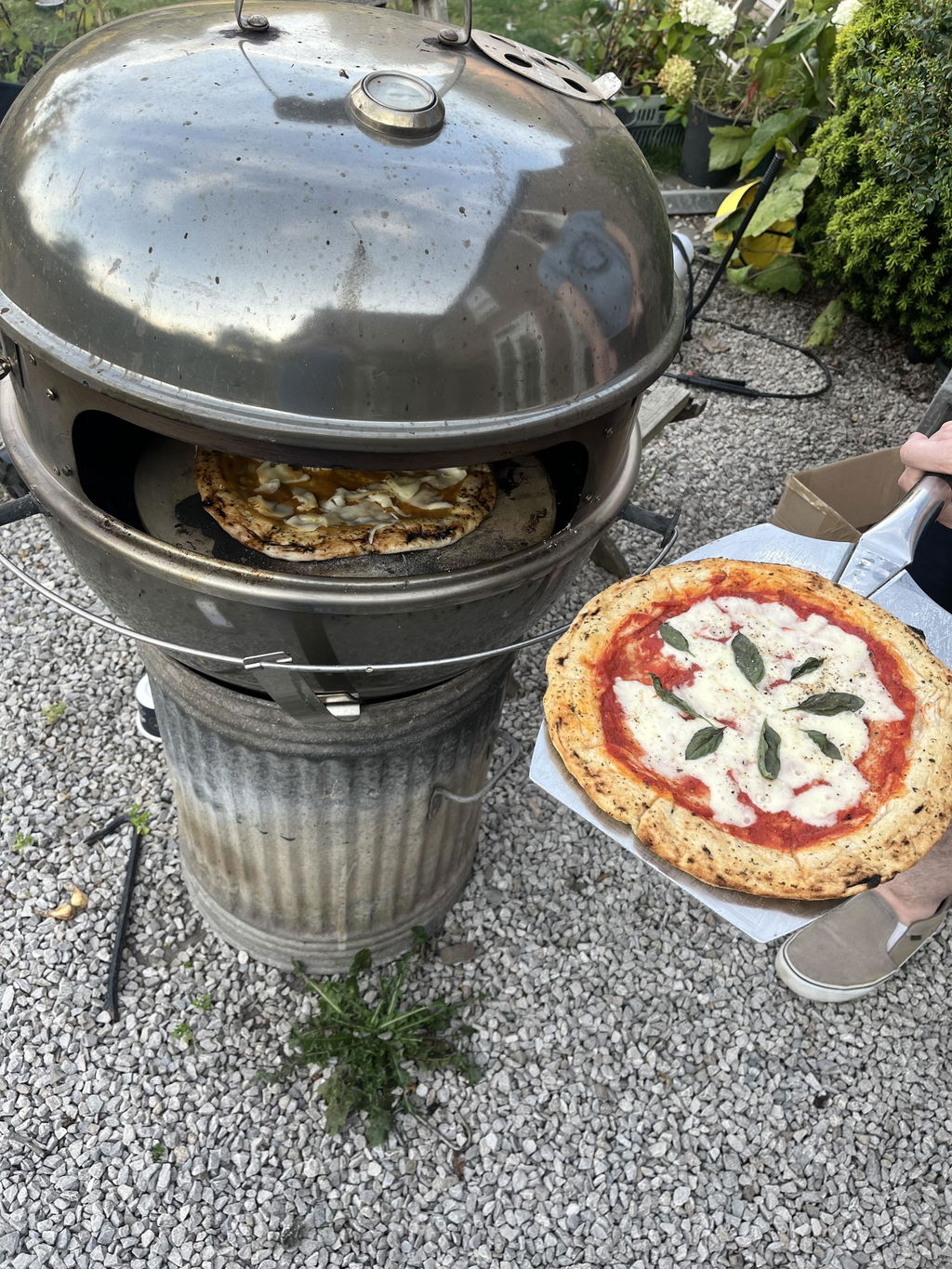
- Neapolitan-style pies baked at very high heat call for fresh fior di latte or Mozzarella di Bufala Campana DOP, torn and placed sparingly so the crust stays visible.
- Part-skim low-moisture works in a pinch but browns unevenly and turns slightly rubbery once it cools. Whole-milk is almost always worth the small extra cost.
- Pre-shredded bags are coated with anti-caking agents that dull the melt. Buy a block and shred it yourself.
Table of Contents
- Which mozzarella should you buy for your oven and pizza style?
- How moisture and milkfat change what happens in your oven
- Match your cheese to the pizza style and oven temperature
- How to prepare mozzarella for pizza: draining, shredding, and timing
- Block vs. pre-shredded vs. fresh ball: which form should you buy?
- How to buy and store mozzarella so it performs well
- Chef-tested tips and the mistakes most home cooks make
- Key Takeaways
- Doughdorks makes it easier to get the cheese and dough right together
Which mozzarella should you buy for your oven and pizza style?
The single most useful question to ask before you buy is: how hot does your oven actually get, and how long will the pie bake? Everything else follows from that.
| Type | Best for | Oven temp | Quick prep note |
|---|---|---|---|
| Low-moisture whole-milk block | New York, Sicilian, deep dish, most home styles | moderate household oven temperatures | Shred at home on a large-hole grater |
| Fresh fior di latte or bufala | Neapolitan, minimalist Margherita | very high heat ovens | Drain 20 min, tear, add halfway through bake |
| Low-moisture part-skim | Budget builds, blending filler | moderate household oven temperatures | Acceptable; expect less browning and flavor |
| Pre-shredded bag | Convenience only | Any | Anti-caking agents reduce melt quality |
Whole-milk is the general rule because fat drives flavor and browning. Part-skim is acceptable when you're blending cheeses and the other component adds richness, but as a solo cheese it tends to fall flat. Pre-shredded bags are a last resort. Shredding a block yourself takes two minutes and produces a noticeably glossier, more cohesive melt.
How moisture and milkfat change what happens in your oven
Fresh mozzarella can reach 60% moisture or higher, especially hand-spun varieties from a specialty shop. Low-moisture mozzarella sits at 45–52% by FDA standard. That gap matters enormously once heat hits the cheese.
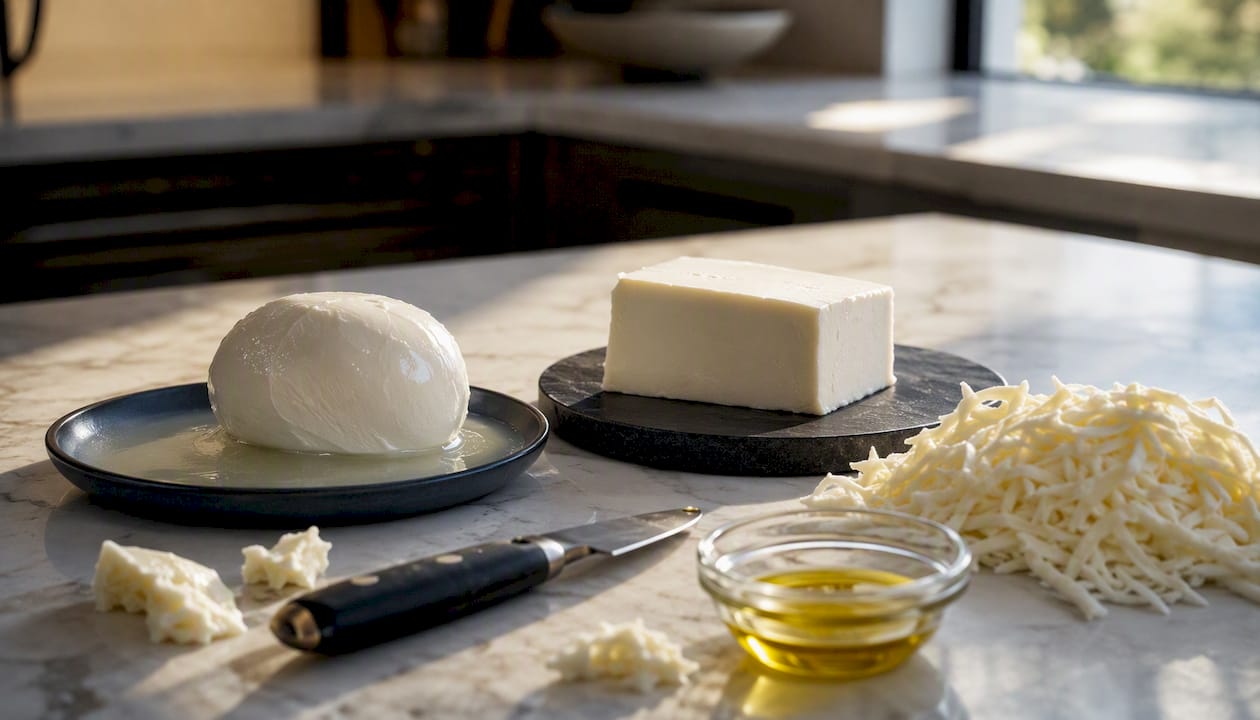
Water in the cheese turns to steam during the bake. On a fresh ball, that steam has nowhere to go except down into the crust. The result is a wet, soft center that never fully crisps. Low-moisture mozzarella releases far less steam, so the crust stays intact and the cheese browns instead of pooling.
Milkfat works differently. Fat doesn't evaporate. It melts, spreads, and coats the proteins in the cheese, keeping them pliable and glossy. Whole-milk mozzarella stays stretchy and moist-looking even when lightly browned. Part-skim loses that fat buffer, so the proteins tighten up and form the unattractive, sheet-like crust you've probably seen on a reheated slice. Every part-skim mozzarella scored below every full-fat option in Serious Eats' melt tests.
Pro Tip: If you're using fresh mozzarella in a home oven, tear it into pieces and let it drain on paper towels for at least 20 minutes before assembly. That single step removes a surprising amount of surface moisture before the bake even starts.
Mozzarella's balance of moisture, elasticity, and fat makes it the most meltable base cheese for pizza. Other cheeses add flavor or texture but don't replace it as the foundation.
Match your cheese to the pizza style and oven temperature
Cheese selection and pizza style are inseparable. A fresh, high-moisture cheese is correct for a 90-second Neapolitan bake; it would wreck a 7-minute home-oven pie.
| Pizza style | Oven temp / bake time | Mozzarella | Prep note |
|---|---|---|---|
| Neapolitan | 800°F+ / 90 sec | Fresh fior di latte or bufala DOP | Drain, tear, add at start or halfway |
| New York | 500–550°F / 6–8 min | Low-moisture whole-milk block | Shred; blend 20–30% provolone for depth |
| Sicilian / Detroit | 500°F / 6–8 min | Low-moisture whole-milk block | Shred generously; cheese goes edge-to-edge |
| Deep dish | — | Low-moisture whole-milk block | Layer under sauce to prevent burning |
AVPN rules specify torn fresh cheese placed in limited quantities so the tomato sauce stays visible. That's not just tradition. It's a moisture-management strategy: sparse coverage means less steam trapped under the cheese.
For New York-style, blending roughly 70–80% mozzarella with 20–30% provolone is a classic pizzaioli move. The provolone sharpens the flavor and improves browning without sacrificing the stretch that mozzarella provides.
If your home oven tops out at 500°F and you want Neapolitan results, use a pizza steel preheated for at least 45 minutes and add the cheese halfway through the bake. You won't replicate a wood-fired oven, but you'll get far closer than if you load the pie cold.
How to prepare mozzarella for pizza: draining, shredding, and timing
Preparation is where most home cooks lose the gains from buying good cheese. Here's the sequence that works.
- Fresh ball (fior di latte or bufala): Remove from brine and slice or tear into pieces roughly 1–1.5 inches. Lay flat on a double layer of paper towels. Pat the top dry. Let sit 20 minutes. For a 12-inch Neapolitan, use a modest amount of cheese, distributed sparsely.
- Low-moisture block: Shred on the large holes of a box grater or in a food processor fitted with a shredding disc. For a 12-inch New York or Sicilian pie, use a moderate amount of cheese suitable for these styles. Shred cold. Cold cheese shreds cleanly; warm cheese smears.
- Slicing vs. dicing: Thin slices (about ¼ inch) work well for Neapolitan and minimalist builds. Diced cubes suit deep dish, where you want pockets of melted cheese rather than a uniform blanket.
- Timing: For standard home-oven bakes, add shredded low-moisture mozzarella at the start. For fresh mozzarella in a home oven, add it halfway through the bake to prevent moisture pooling and rubbery texture.
- Test your oven: Bake one plain cheese pizza with your setup and note where the cheese browns first. That tells you where the hot spots are and whether you need to rotate the pie.
Pro Tip: Shred your block cheese the day before and leave it uncovered in the fridge overnight. The surface dries out slightly, which improves browning and reduces steam during the bake.
Block vs. pre-shredded vs. fresh ball: which form should you buy?
The form factor you choose at the store has a direct effect on what lands on your plate.
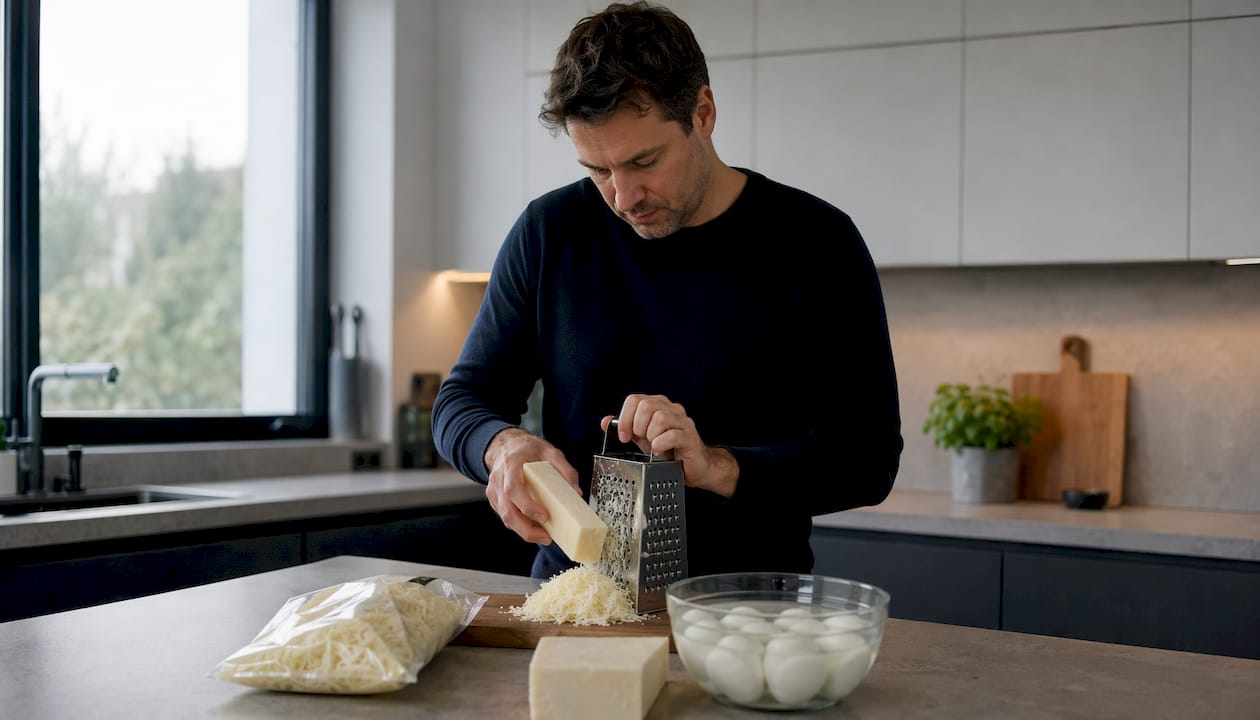
Block mozzarella is the strongest all-around choice for home cooks. No anti-caking coatings, no added starch. The cheese melts the way it's supposed to: glossy, elastic, and cohesive. Lab-style melt tests show that block-shredded whole-milk mozzarella produces higher gloss and more cohesive stretch than pre-shredded bagged cheese. The two-minute shred is worth it every time.
Pre-shredded bags are coated with cellulose, potato starch, or cornstarch to prevent clumping. That coating browns faster and forms a dry, slightly gritty crust rather than a clean melt. Use them only when convenience is the absolute priority.
Fresh balls are worth the extra prep and expense for one specific use case: a Neapolitan or minimalist Margherita where the cheese is the star and the bake is fast. In a longer home-oven bake, fresh mozzarella weeps moisture and can turn rubbery. The fix is draining and delayed addition, but if you're making a New York slice, just use the block.
Quick decision flow: high-heat oven (800°F+) and a Neapolitan build? Fresh ball. Standard home oven and any other style? Low-moisture whole-milk block, shredded at home. Short on time? Pre-shredded whole-milk is acceptable; part-skim is not.
How to buy and store mozzarella so it performs well
What to look for on the label:
- "Whole milk" or "whole-milk" in the name or ingredients
- "Low moisture" for block mozzarella intended for most pizza styles
- "Fior di latte" for fresh cow's-milk mozzarella
- "Mozzarella di Bufala DOP" for authentic buffalo mozzarella
- rBST-free milk is a quality signal on premium retail blocks
What to avoid:
- "Fat-free" or "reduced-fat" mozzarella. The fat is doing real work here.
- Bags without a moisture or fat designation. If the label doesn't tell you, assume part-skim.
- Blocks that feel wet or slimy through the packaging.
Storage:
| Form | Unopened | After opening | Freeze? |
|---|---|---|---|
| Fresh ball in brine | Use by sell-by date | 2–3 days in fresh brine | Yes, 1–2 months; texture changes |
| Low-moisture block | 4–6 weeks refrigerated | 1–2 weeks wrapped tightly | Yes, up to 6 months |
| Shredded at home | N/A | 3–5 days in airtight container | Yes, use within 3 months |
| Pre-shredded bag | Per package date | 5–7 days | Yes, use straight from frozen |
If you need to freeze mozzarella, shred fresh balls before freezing. Shredded fresh mozzarella melts well on pizza and is nearly indistinguishable from fresh once it's cooked. Never thaw mozzarella at room temperature. Move it to the fridge and let it thaw slowly, 7–8 hours per pound, to minimize condensation and texture loss. Frozen mozzarella works best in cooked dishes like pizza, where any textural change disappears under heat.
Chef-tested tips and the mistakes most home cooks make
The single most replicable test you can run at home: bake two identical 10-inch cheese pizzas side by side. One uses pre-shredded bagged mozzarella; the other uses the same weight of block cheese you shredded yourself. Watch the melt. The block-shredded version will be glossier, more elastic, and more evenly browned. That one experiment is more convincing than any written description.
Beyond that, here's what pizza pros actually do differently:
- They blend for New York style. A 75/25 mozzarella-to-provolone ratio adds sharpness and improves browning without losing stretch. Pizza professionals recommend this blend for replicating pizzeria flavor at home.
- They never use fat-free. The fat content showed the highest correlation between well-ranked and poorly ranked cheeses in blind melt tests.
- They add fresh mozzarella late. For any bake longer than 4 minutes, fresh mozzarella goes on in the final 2–3 minutes or halfway through, not at the start.
Pro Tip: For a smoky, wood-fired character without a wood oven, try blending in a small amount of smoked mozzarella (scamorza affumicata). It adds depth without overwhelming the base cheese.
The key finding from pizza-lab style melt tests: whole-milk block mozzarella, shredded at home, consistently outperforms pre-shredded bagged cheese on gloss, stretch, and even browning. The difference comes down to one thing: anti-caking coatings on bagged cheese interfere with a clean, cohesive melt. Buy the block.
Key Takeaways
Low-moisture whole-milk mozzarella, shredded from a block at home, is the single most reliable choice for great pizza across nearly every home-oven style.
| Point | Details |
|---|---|
| Default cheese | Low-moisture whole-milk block mozzarella suits most home pizza styles and oven temperatures. |
| Neapolitan exception | Fresh fior di latte or bufala DOP, drained and torn, is correct for 800°F+ bakes of 60–90 seconds. |
| Shred from block | Anti-caking agents in pre-shredded bags reduce melt gloss and stretch; shredding at home takes two minutes. |
| Moisture management | Drain fresh mozzarella 20 minutes before assembly and add it halfway through longer home-oven bakes. |
| Doughdorks | Doughdorks offers curated pizza toppings, including artisan cheeses, alongside 48-hour fermented dough balls for home Neapolitan-style builds. |
Why whole-milk low-moisture is the practical default for home cooks
Authenticity is worth chasing, but it has to be honest about what your oven can do. A true Neapolitan pie needs 850°F and 90 seconds. Most home ovens top out at 500–550°F and bake a pie in 6–8 minutes. In that environment, fresh mozzarella weeps, the crust softens, and the result is a good-looking pie that disappoints on the first bite. Low-moisture whole-milk mozzarella was essentially engineered for exactly this bake window. It handles the longer exposure to heat without breaking down, browns reliably, and stretches the way pizza is supposed to stretch. If you have a high-heat pizza oven or a wood-fired setup, by all means use fresh fior di latte. For everyone else, the block is the answer. Doughdorks stocks curated pizza toppings including artisan cheeses that pair directly with their 48-hour fermented dough, so you're not sourcing ingredients from five different places.
Doughdorks makes it easier to get the cheese and dough right together
Getting the cheese right is only half the equation. The dough underneath determines whether a great mozzarella actually shines or disappears into a mediocre base.

Doughdorks ships 48-hour fermented Neapolitan pizza dough made with Italian 00 flour, fresh yeast, and extra virgin olive oil, directly to your door. The dough is built to handle the high-heat bakes where fresh fior di latte performs best, and it pairs just as well with low-moisture whole-milk mozzarella for home-oven New York and Sicilian builds. If you want to skip the dough prep entirely, the pre-cooked Neapolitan bases are a practical option for weeknight pies where fresh mozzarella can go straight on without a long bake. Pick your cheese, pick your dough, and follow the prep steps above. That's the whole system.
Recommended
- Anchovies on Pizza: What Home Cooks Need to Know
- Neapolitan Pizza Dough: Authentic Recipe for Home Ovens
- Ready Made Pizza Bases Guide for Better Pizza - Dough Dorks
- Freshly Made Pizza Dough Balls Delivered | Best Pizza Dough Online
PIZZA NIGHT, SORTED
Build the pizza with proper Italian ingredients
Shop Italian toppings, then add 48-hour fermented dough balls from Dorset for a complete pizza night.
-
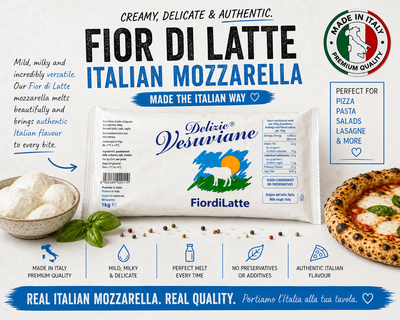 Fior di Latte Mozzarella for Pizza – 1kg
£12.59
Fior di Latte Mozzarella for Pizza – 1kg
£12.59
-
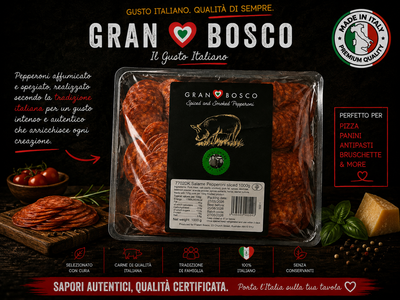 Gran Bosco, Smoked Sliced Pepperoni – 1kg
£18
Gran Bosco, Smoked Sliced Pepperoni – 1kg
£18
-
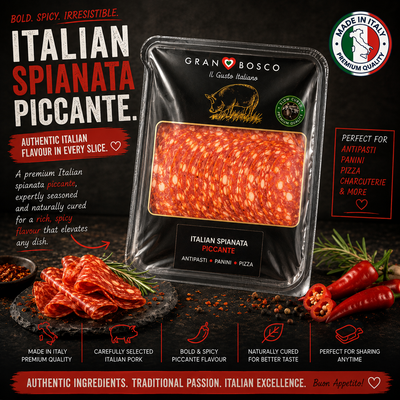 Gran Bosco - Italian Spianata Piccante 250g
£8.10
Gran Bosco - Italian Spianata Piccante 250g
£8.10
Handmade in Dorset • Free UK delivery over £50 • Free proofing pot with every dough ball