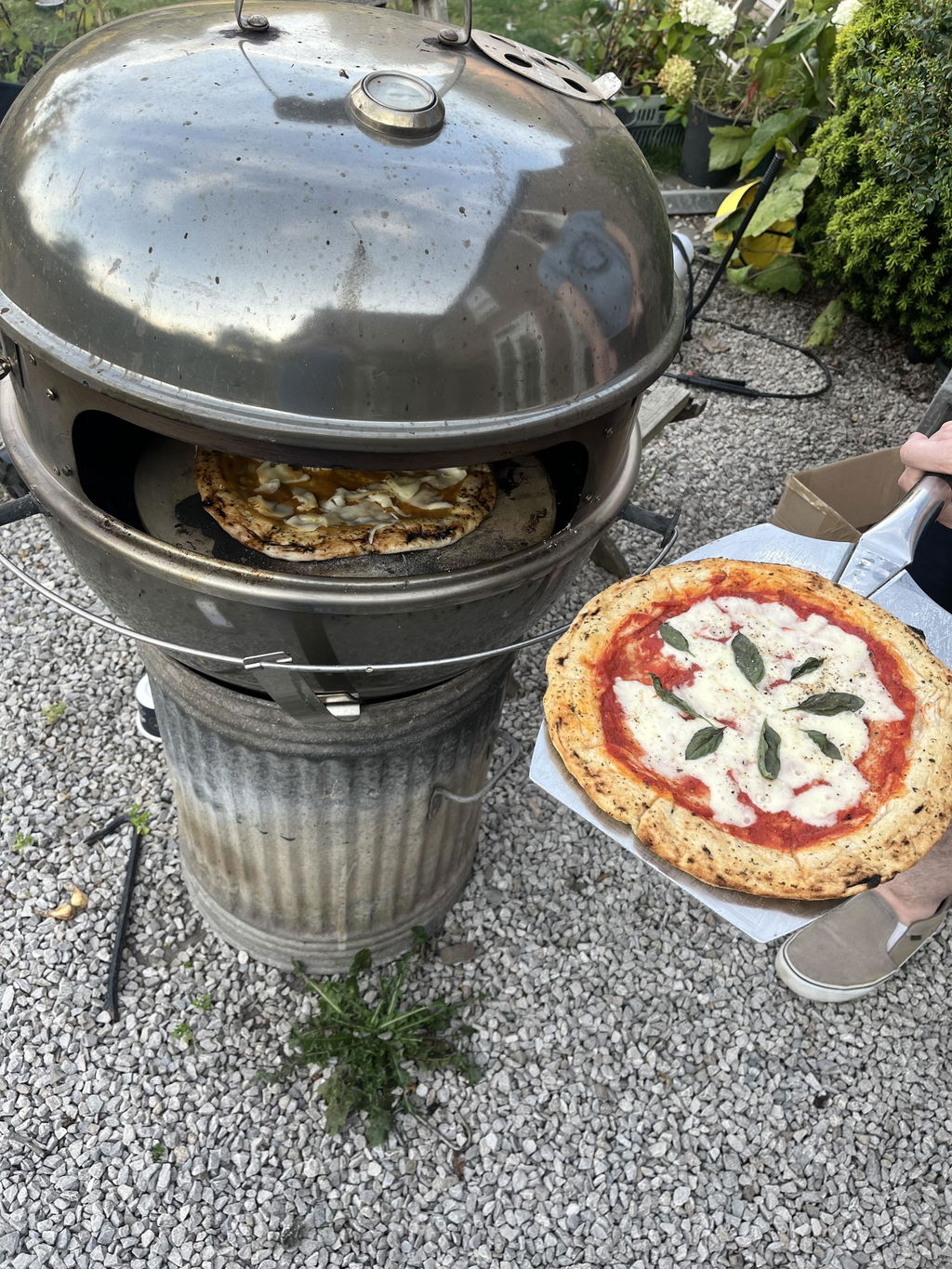
Buying and Baking Ready-Made Neapolitan Pizza Dough Balls
Discover how to elevate your pizza game with ready-made Neapolitan dough balls that guarantee pizzeria-quality results at home.
“Balling pizza dough” in this guide means one thing: ready-made Neapolitan-style dough balls you buy instead of mixing from scratch. If you want pizzeria results without the two-day prep, buy a 48-hour cold-fermented dough ball made with Italian 00 flour, like the ones Doughdorks handcrafts in small batches. Slow fermentation builds flavor and stretch, and a properly portioned ball is built to survive a screaming-hot home oven.
- Skip the mixer and the guesswork on hydration.
- Look for 48 hour fermentation on the label, not “fresh made today.”
- Pick a ball weight that matches your pizza size and your oven’s heat ceiling.
Key Takeaways
Ready-made Neapolitan dough balls fermented for 48 hours in Italian 00 flour deliver pizzeria-style results in a home oven when stored, thawed, and baked correctly.
| Point | Details |
|---|---|
| Check the fermentation window | Look for 48 hour cold fermentation on the label for real flavor and stretch. |
| Match weight to pizza size | Aim for 220 to 280 grams per ball depending on your target diameter. |
| Freeze at the right stage | Ball and cold-ferment for 24 hours first, then oil, wrap, and freeze for up to two months. |
| Preheat longer than you think | Give a stone or steel 45 to 60 minutes at max oven heat before baking. |
| Buy the fermentation, skip the prep | Doughdorks’ 48-hour dough balls remove the hardest step and let you focus on shaping and baking. |
Table of Contents
- What Ready-Made Neapolitan Dough Balls Actually Contain
- How Do You Choose Dough Balls for Your Oven and Style?
- How to Store, Freeze, and Thaw Dough Balls Correctly
- How Do You Proof, Shape, and Bake a Dough Ball at Home?
- Why Buying Dough Beats Making It From Scratch
- Ready to Skip the Two-Day Prep? Order Dough Balls Instead
- Sources
What Ready-Made Neapolitan Dough Balls Actually Contain
A genuine Neapolitan-style dough ball is a short ingredient list done right, not a shortcut. Expect Italian 00 flour, water, salt, and either fresh yeast or a sourdough culture. Sugar and oil are usually absent or minimal, since the Neapolitan style leans on gluten development and time, not enrichment, for its char and chew.
Production matters as much as ingredients. A 48-hour cold ferment gives the dough enough time to develop extensibility and the faint tang that separates a real Neapolitan crust from a bland supermarket base, a timeline supported by cold fermentation research from Baking Steel. Skip that window and you get a dough that fights back when you try to stretch it.
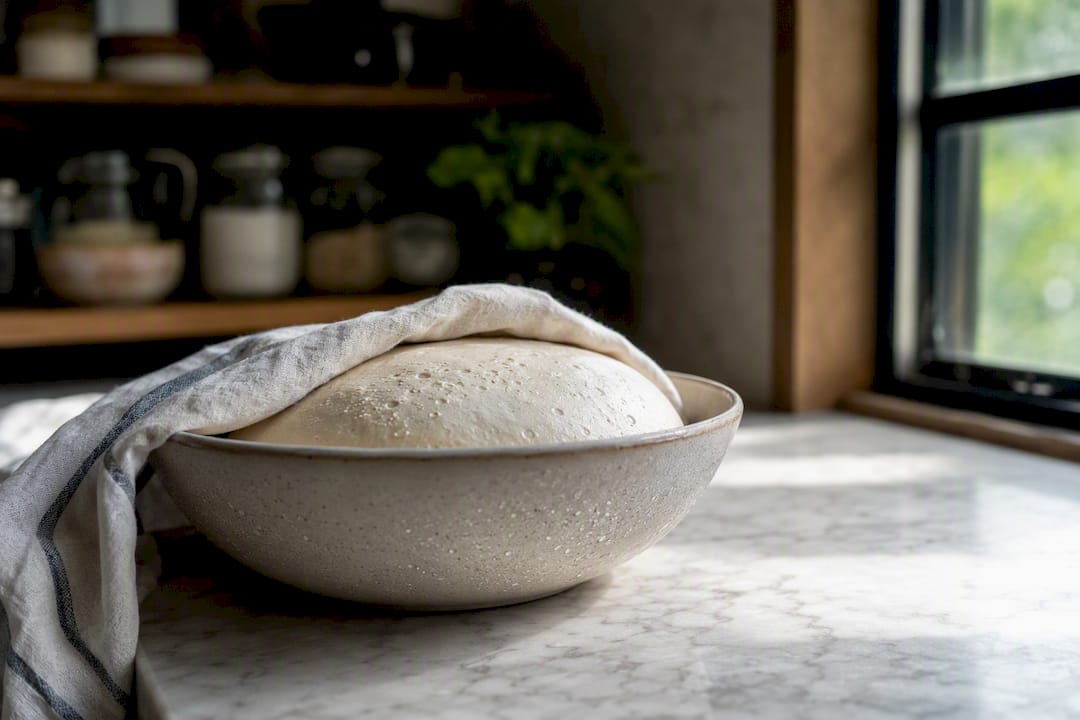
Portioning tells you a lot too. Most retailers sell balls sized appropriately for 10 to 12 inch pizzas, and dough suppliers generally recommend matching gram weight to your target diameter rather than eyeballing it.
Here’s what separates a serious product from a filler one:
- Fermentation time listed on the package, not just “made fresh.”
- Ball weight stated in grams, so you can plan pizza size ahead.
- Fresh vs. frozen clearly labeled, since the handling rules differ.
Fresh dough balls bake with the best texture but demand a plan. They are best used soon after purchase. Frozen dough balls trade a slight texture edge for flexibility, allowing you to keep a stash on hand for occasional use.
How Do You Choose Dough Balls for Your Oven and Style?
Not every dough ball suits every oven, and matching the two is the single biggest lever you control before the bake even starts. A home oven maxing out at 500°F behaves nothing like a 900°F Neapolitan wood-fired setup, and the dough you buy should account for that gap.
- Match ball weight to your pizza size. A 220 gram ball suits a 10 inch pie; go closer to 280 grams for 12 inches. Undersized balls stretch too thin and tear; oversized ones stay doughy in the center.
- Favor 00 flour and a wetter dough for blistering. Higher hydration doughs puff and char faster under intense heat, which is exactly what you want from a Neapolitan crust. Home ovens paired with a preheated steel or stone get closer to that effect than any other home setup.
- Skip high-sugar formulas if you’re baking hot. Sugar promotes browning, and on a 500°F stone that means burnt spots before the crumb even sets.
- Decide fresh or frozen based on how often you actually make pizza. Weekly pizza nights justify fresh; occasional cravings are better served by a freezer stash.
- Read the label for fermentation time, oil content, sugar, and allergens before you buy, and check whether the balls were portioned after cold fermentation rather than before.
Pro Tip: If the label doesn’t mention when the dough was balled relative to fermentation, assume the worst. Balls fermented whole and then divided lose gas and structure right before baking, which shows up as a denser crust.
How to Store, Freeze, and Thaw Dough Balls Correctly
Storage mistakes ruin more pizza nights than bad technique does. The rules differ depending on whether you’re holding dough for a few days or a few weeks.
- Short-term fridge storage. Keep balls in individual lightly oiled containers or deli cups with lids, not stacked in one bag where they’ll fuse together. Three to five days in the fridge is a safe window for a balled, fermenting dough.
- Freeze at the right stage. The dough should complete at least 24 hours of cold fermentation before you ball and freeze it, since freezing too early stalls yeast development permanently. Oil the ball lightly, wrap it tightly in plastic, then place it in a labeled zip-top bag to block freezer burn, a method confirmed by Allrecipes’ testing.
- Know your storage window. Tested protocols put the practical limit at around two months in a standard home freezer before texture and rise start to suffer, which lines up with industry practice of freezing at peak fermentation rather than before it.
- Thaw with intention. An overnight move to the fridge is the safest bet. If you’re short on time, a quick water-temper, submerging the wrapped ball in roughly 80°F water for 20 to 30 minutes, speeds things up without shocking the yeast.
- Judge readiness by touch, not the clock. A thawed ball ready to proof feels soft and slightly tacky, springs back slowly when poked, and shows no icy cold spots at the center.
Two months is a useful ceiling to plan around, but the real signal is always how the dough behaves in your hand, not how long it’s been in the freezer.
How Do You Proof, Shape, and Bake a Dough Ball at Home?
The gap between a decent homemade pizza and a genuinely great one usually comes down to three steps most people rush: temper, shape, and heat.
Let a refrigerated or thawed ball sit at room temperature for 30 to 120 minutes before shaping, a rest window common across cold-fermentation workflows. You’ll know it’s ready when a light finger poke leaves a slow-filling dimple instead of springing straight back or collapsing.
- Shape gently. Press from the center outward with your fingertips, leaving a puffed rim, and avoid a rolling pin, which crushes the gas bubbles you spent two days building.
- Preheat your stone or steel for a full 45 to 60 minutes at your oven’s maximum setting. Most home ovens top out between 500°F and 550°F, well short of a wood-fired deck, so that preheat time matters more than usual.
- Slide the pizza onto the hottest part of the stone and bake until the rim blisters, typically 6 to 9 minutes depending on your oven.
- Finish under the broiler for the last 60 to 90 seconds if your crust needs more char on top without overbaking the bottom.
Pro Tip: A wet center almost always means the oven wasn’t hot enough for long enough before the pizza went in. Add 15 minutes to your preheat before you blame the dough.
If your dough keeps tearing, you’re probably degassing it too aggressively, or shaping straight from the fridge instead of after a proper temper.
Why Buying Dough Beats Making It From Scratch
Most advice on this topic obsesses over kneading technique and hydration ratios, as if the average home cook needs a baker’s precision to get a good crust. That misses the real bottleneck: home ovens. You can nail every fermentation variable and still get a mediocre pizza because your oven can’t hit 900°F.
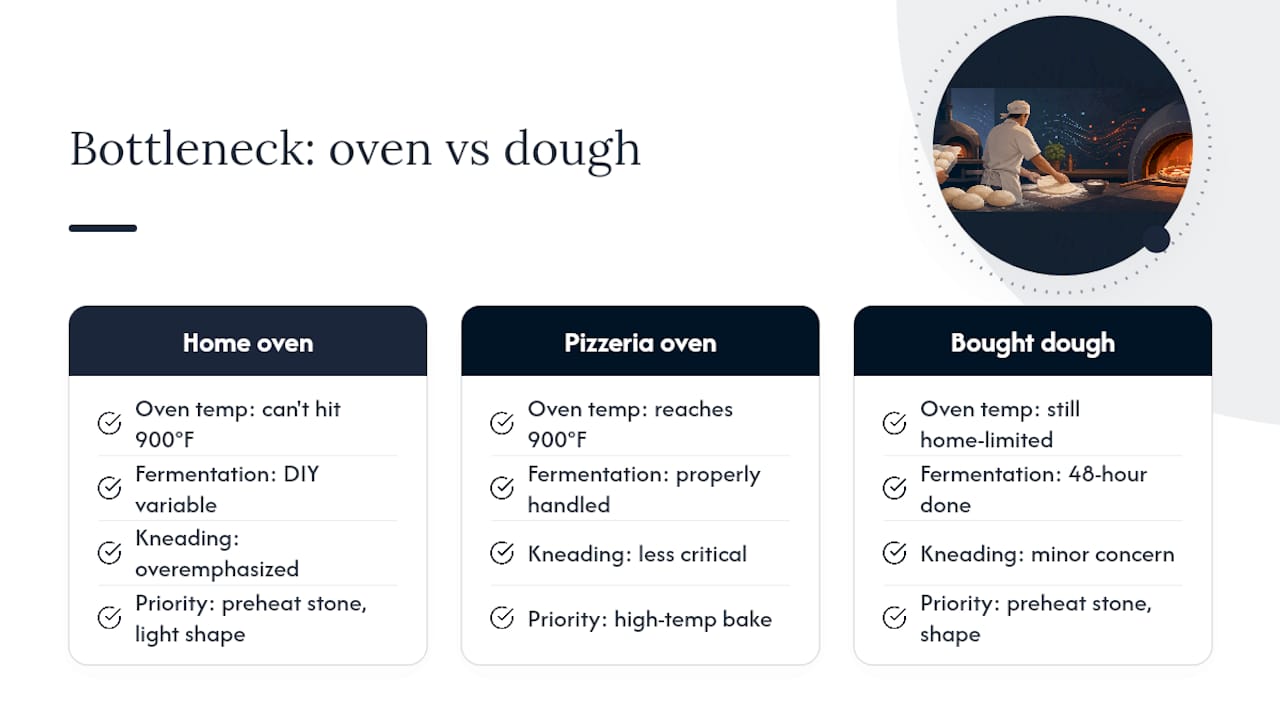
Buying a dough ball that’s already been through a proper 48-hour ferment removes the variable most home bakers get wrong anyway, and lets you focus your effort where it actually pays off: preheating your stone properly and shaping with a light hand. The debate over kneaded versus no-knead dough matters far less once someone else has already handled fermentation correctly.
What I’d prioritize first isn’t the recipe. It’s the label. Check the fermentation time, check the flour, and check whether the ball was portioned after fermenting or before. Get that right and the bake takes care of itself.
— Michael
Ready to Skip the Two-Day Prep? Order Dough Balls Instead
Doughdorks gets you a pizzeria-quality crust without the two-day commitment scratch dough demands. Every ball ferments for 48 hours in Italian 00 flour before it ever reaches your kitchen, so the hardest part of pizza night is already done by the time the box arrives.

If you’re testing the waters, the ready-made box of 8 is the easiest entry point, enough for a few pizza nights without committing to a bulk order. Regular pizza nights call for something bigger: the mixed 24-ball triple flavor box keeps variety on hand, and the sourdough dough balls are worth a look if you want more tang in the crust.
Dough Dorks dough arrives frozen and portioned for convenient pizza nights. Keep it frozen and follow the storage and best-before instructions on the packaging. Defrost fully and allow the dough to relax before stretching. Order the 48-hour Neapolitan dough by weight today and have restaurant-quality dough in your kitchen before the weekend.
Sources
- Can You Freeze Pizza Dough? — Allrecipes
- What’s the best way to freeze pizza dough? — Serious Eats
- How to Freeze Pizza Dough (And Thaw It Right) — JayArr Pizza
- 48-Hour Pizza Dough: Cold Ferment Recipe — Baking Steel
- Where to Buy Pizza Dough Balls, Fresh/Frozen — Pizza Logic
Recommended
- Italian Herb Neapolitan Pizza Dough Balls | Dough Dorks
- 48-Hour Sourdough Pizza Dough Balls | Handmade Neapolitan Dough
- Carolina Reaper Chilli Dough - Ready Made Neapolitan Pizza Dough Balls
- Best Pizza Dough Balls for Home Cooks (2026 Guide)
READY-MADE • FROZEN • UK DELIVERY
Skip the mixing. Keep proper dough in your freezer.
48-hour fermented, individually proofed in their own pots and snap-frozen for freshness. Packed with insulation for UK delivery; defrost, stretch, top and bake.
-
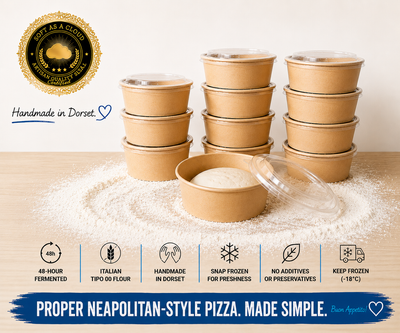 48-Hour Neapolitan-Style Pizza Dough Balls – Box of 12
£22.88
48-Hour Neapolitan-Style Pizza Dough Balls – Box of 12
£22.88
-
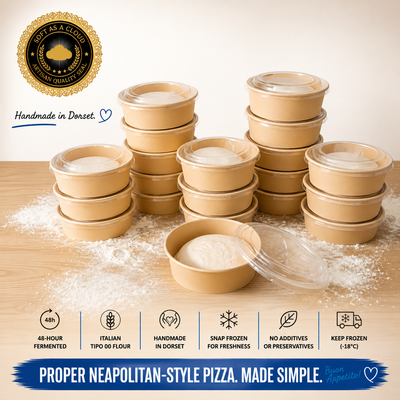 48-Hour Neapolitan-Style Pizza Dough Balls – Box of 20
£32.30
48-Hour Neapolitan-Style Pizza Dough Balls – Box of 20
£32.30
-
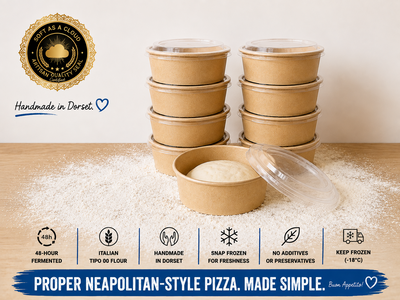 48-Hour Neapolitan-Style Pizza Dough Balls – Box of 8
£18
48-Hour Neapolitan-Style Pizza Dough Balls – Box of 8
£18
Handmade in Dorset • Free UK delivery on £50+ • Free proofing pot with every dough ball