Wine with Pizza: Sparkling First, Then Light Reds
Discover the best wines to pair with pizza, from sparkling options to light reds. Elevate your dining experience with perfect matches!
The safest bet for wine with pizza is a chilled sparkling wine or a light, high-acid red. Bubbles and bright fruit cut through melted cheese and char in a way heavy, tannic wines never manage, and sommeliers interviewed by Real Simple landed on the exact same answer independently. If you want a shortlist to grab off the shelf tonight:
- Prosecco or Lambrusco for almost any pie
- Gamay (Beaujolais) for tomato-based pizzas
- Barbera or Sangiovese for meaty or sauced pies (commonly recommended in pairing guides)
- Vermentino for white or seafood pizzas
- Rosé when you can’t decide
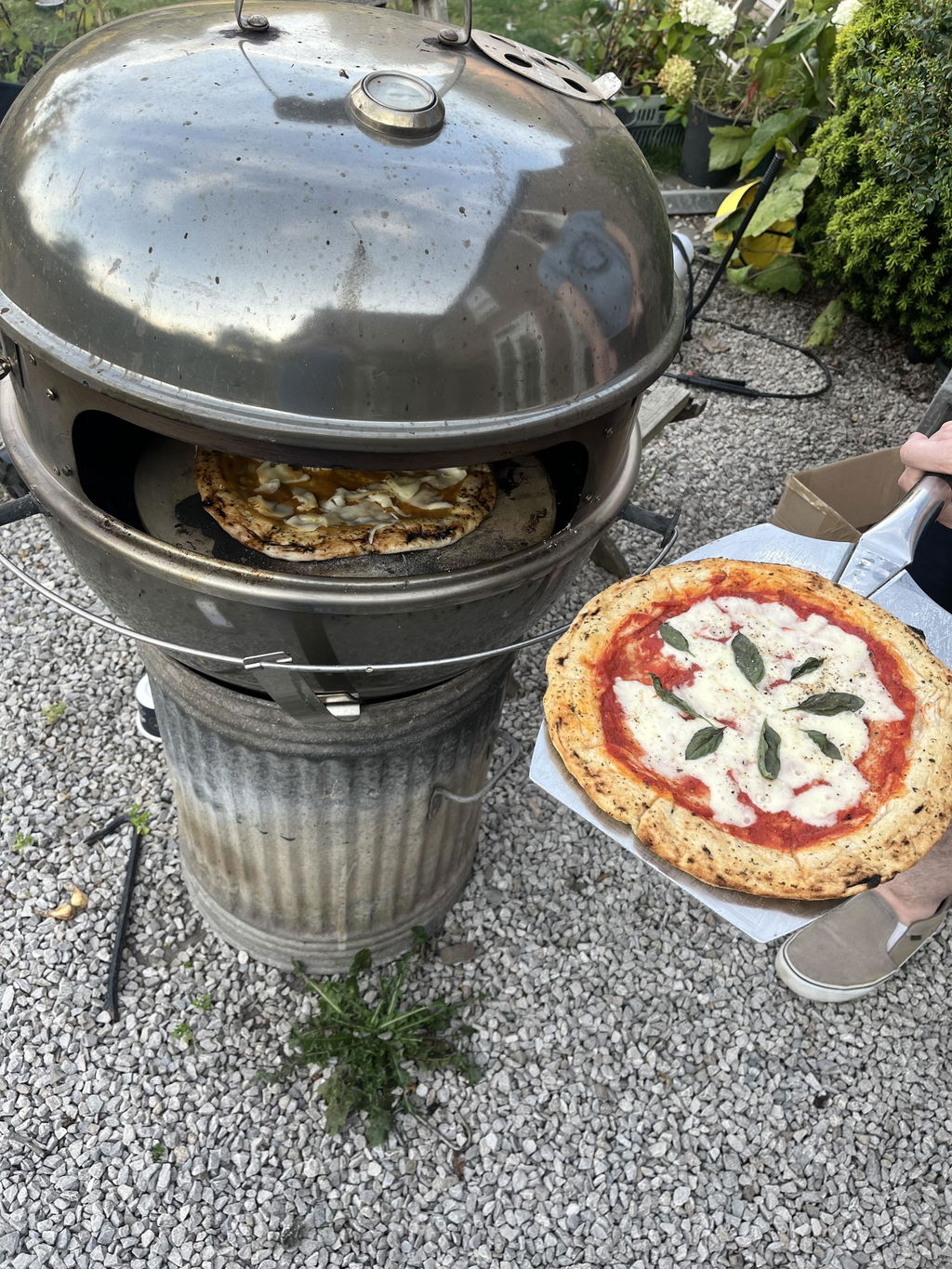
Pair one of these with a Margherita from Doughdorks and you’ve got a genuinely good night ahead of you.
Key Takeaways
Sparkling wines and light, high-acid reds pair with more pizza styles than any other category of wine, because acidity and effervescence handle tomato, fat, and char at once.
| Point | Details |
|---|---|
| Start with bubbles | Prosecco or Lambrusco works across nearly every pizza style, sommeliers agree. |
| Match the topping | Base your wine choice on the dominant sauce or topping, not the crust type. |
| Favor acid over tannin | Choose Barbera, Sangiovese, or Gamay for tomato-based pies instead of heavy, tannic reds. |
| Adjust for sweetness | Off-dry Riesling or Zinfandel balances barbecue and Hawaiian-style pizzas better than dry reds. |
| Serve it cold | Chill whites and sparklers fully; serve light reds slightly cool, around 55 to 60°F. |
Table of Contents
- Why Wine and Pizza Actually Work Together
- What Rules Should Guide Any Pizza and Wine Pairing?
- Best Wine Pairings by Pizza Type
- Which Sparkling Wines Work Best With Pizza?
- Fifteen Wines to Try With Pizza
- Pairing Wine When You’re Making Pizza at Home
- Frequently Asked Questions
- Sources
Why Wine and Pizza Actually Work Together
Pizza throws a lot at a glass of wine at once: tomato acid, fat from melted mozzarella, char from a hot oven or stone, and often salt from cured meats. A wine needs its own acidity to match the sauce and enough freshness to cut the fat, or the whole plate starts to taste heavy.
- Tomato acidity needs a wine with comparable acid, or the wine tastes flat next to the sauce.
- Melted cheese fat coats the palate, and bubbles or bright acidity wash it clean between bites.
- Char and smoky crust edges clash with heavy oak, which just piles smoke on smoke.
Bubbles work especially well because effervescence physically lifts fat off the tongue while the wine’s acidity refreshes it, according to sommelier consensus reported by Decanter.
Pro Tip: Skip anything heavily oaked or aggressively tannic, a big Napa Cabernet or Barolo included. Those wines are built for red meat, not tomato sauce and melted cheese, and the tannin fights the acid instead of complementing it.
What Rules Should Guide Any Pizza and Wine Pairing?
You don’t need a sommelier certification to get this right. Three rules cover almost every pizza on the menu.
- Match the topping, not the crust. A pairing rule confirmed across multiple wine guides says the dominant sauce or topping decides the wine, not whether the crust is thin, thick, or wood-fired.
- Favor acidity over tannin. Tomato sauce wants a wine with matching acid and modest tannin. Big, tannic reds taste bitter and metallic next to tomato.
- Use bubbles or chilled rosé as your reset button. When toppings get complicated (spicy sausage, sweet barbecue sauce, three cheeses at once), sparkling wine or a cold rosé rarely goes wrong. For sweeter sauces, an off-dry Riesling or a fruit-forward Grenache handles the sugar better than a dry, structured red.
Serve whites and sparkling wines cold, straight from the fridge. Light reds like Gamay or Barbera do best slightly chilled, around 55 to 60 degrees Fahrenheit, not room temperature. A standard white wine glass works fine for both; you don’t need anything fancier for pizza night.
Pro Tip: If you’re pouring for a group with mixed pizzas on the table, a bottle of Lambrusco or Prosecco is the one wine that will work with everything, from Margherita to meat lovers.
Best Wine Pairings by Pizza Type
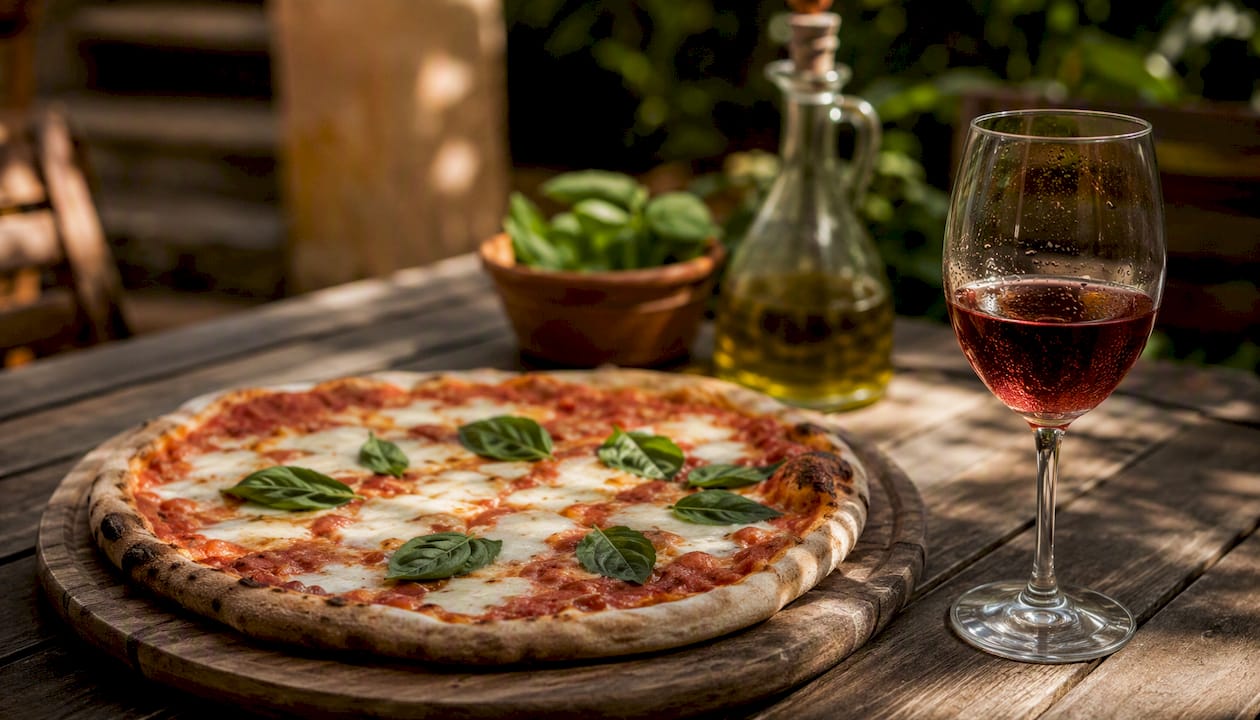
Margherita and classic tomato pies. A wine with good acidity and bright fruit balances the tomato and fresh mozzarella. Barbera, Sangiovese, or Gamay all do this well, their acid mirroring the sauce while their light tannin doesn’t fight the cheese. Serve lightly chilled. If you’re building a classic Margherita at home, any of these three is generally considered a safe first pour.
Pepperoni, sausage, and meat pizzas. Go for fruit-forward, medium-bodied reds with soft tannin: Barbera, Nero d’Avola, Grenache, or a mid-weight Côtes du Rhône. Avoid heavily oaked reds, which turn cured meat fat greasy on the palate instead of cutting through it.
White pizzas, ricotta, and béchamel. Without tomato acidity in the mix, crisp unoaked whites take over. Soave, Vermentino, or an unoaked Chardonnay keep pace with the richness of ricotta and mozzarella without adding more weight.
Mushroom and earthy toppings. Grüner Veltliner’s peppery edge or a light Pinot Noir mirrors the earthiness in mushrooms while staying gentle on tannin.
BBQ and sweet-savory pies. Off-dry Riesling or a jammy Zinfandel matches the sugar in barbecue sauce. Lambrusco, with its faint sweetness and fizz, is a fun curveball here too.
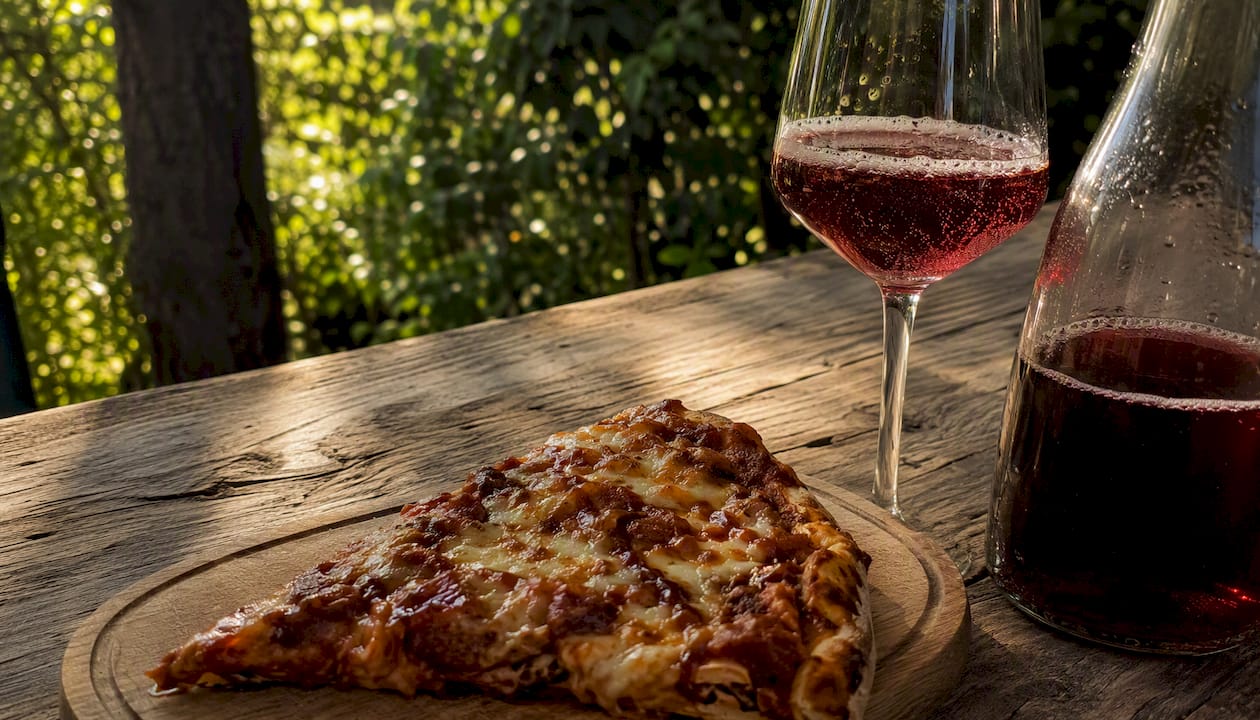
Spicy or garlicky pies. Lower alcohol, good acidity, and light tannin keep heat in check. Rosé, Gamay, or off-dry Riesling all work; a hot spicy Neapolitan sausage topping practically asks for one of these three.
Which Sparkling Wines Work Best With Pizza?
Sparkling wine is the closest thing to a universal pizza wine, and it comes in more styles than most people realize.
- Prosecco is light, fruity, and cheap enough to open without ceremony. It’s the default for a reason.
- Lambrusco, a lightly sweet red sparkler, has enough tannin and fruit to stand up to sausage and pepperoni.
- Franciacorta, Italy’s traditional-method sparkling wine, brings more structure and toasty depth for richer pies loaded with cheese or cured meat.
- Pet-nat and frizzante styles offer a looser, funkier texture for drinkers who want something less polished than Champagne-method wines.
Pro Tip: Check the label for brut versus off-dry before you buy. Brut is bone-dry and works with almost anything; off-dry has a touch of sweetness that’s better suited to spicy or barbecue-style pizzas.
Fifteen Wines to Try With Pizza
Any of these styles are widely stocked in supermarkets, independent wine shops, or online retailers, so you shouldn’t have to hunt.
- Prosecco – bubbles that work with nearly every topping.
- Lambrusco di Sorbara – lightly sweet, fizzy red for meat-topped pies.
- Gamay (Beaujolais) – juicy, low-tannin red for Margherita.
- Barbera d’Asti – high acid, food-friendly, great with tomato sauce.
- Sangiovese (Chianti) – classic Italian pairing for red-sauce pizzas.
- Pinot Noir – light-bodied red for mushroom or earthy toppings.
- Nero d’Avola – fruit-forward Sicilian red for sausage and pepperoni.
- Fiano – aromatic Italian white for garlic and herb-forward pies.
- Vermentino – crisp coastal white, ideal with white pizza or seafood.
- Grüner Veltliner – peppery Austrian white that suits mushrooms.
- Côtes du Rhône – medium-bodied red blend for meat lovers’ pizzas.
- Zinfandel – jammy and bold enough for barbecue sauce.
- Off-dry Riesling – handles sweetness and spice in the same glass.
- Provençal rosé – chilled, versatile, good with almost anything.
- Pet-nat – textured, low-intervention fizz for adventurous drinkers.
Pairing Wine When You’re Making Pizza at Home
The wine you pour should follow the choices you already make in the kitchen. A heavier hand with tomato sauce means you need more acid in the glass. A generous layer of mozzarella or ricotta calls for a crisper white. And a well-charred crust from a hot pizza stone or oven pushes you toward wines with less oak, since smoke on smoke gets overwhelming fast.
- Match sauce intensity first, cheese richness second, char level third.
- Using pre-made dough or ready-made toppings doesn’t change the pairing logic. If you’re working with Doughdorks pizza dough, your topping choices still drive the wine, not the crust.
- Chill whites and sparklers a few hours ahead; pull light reds out 15 to 20 minutes before serving so they’re not too warm.
Pro Tip: Hosting a mixed pizza night? Open a Prosecco and a Barbera at the same time. Between the two, you’ll cover Margherita, pepperoni, and white pizza without buying a third bottle.
A Home Cook’s Take on Wine and Pizza
I’ve spent enough nights testing dough recipes and topping combinations to know that the wine matters as much as the sauce. Don’t overthink it: grab a Prosecco, a Barbera, and see what happens.
Frequently Asked Questions
Is red or white wine better with pizza? Neither wins outright. Tomato-based pizzas tend to favor light, high-acid reds like Sangiovese or Barbera, while white pizzas and seafood pies lean toward crisp whites like Vermentino or Soave.
What’s the single best wine with pizza if I only buy one bottle? A dry Prosecco. It’s affordable, widely available, and works with tomato, meat, and white pizzas alike thanks to its acidity and bubbles.
Does the type of cheese change the wine pairing? Yes. Rich, creamy cheeses like burrata or extra mozzarella call for crisper whites or sparkling wine, while a lighter dusting of parmesan leaves more room for a light red.
What wine goes with a spicy pizza? Lower-alcohol wines with good acidity work best. Off-dry Riesling, Gamay, or a chilled rosé all tone down heat instead of amplifying it.
Should wine be served cold or at room temperature with pizza? Whites and sparkling wines should be well chilled. Light reds like Gamay or Barbera taste best slightly cool, not at full room temperature.
Sources
For deeper dives beyond this guide, a few sources stand out:
- Best wine with pizza: Pairing advice plus 15 wines to try
- I Asked 5 Sommeliers the Best Wine to Pair With Pizza—and They All Gave the Same Answer
- Best Wine with Pizza — What Actually Works by Topping
If you want to take the pairing further afield, wine tours through Italian-inspired regions offer a hands-on way to taste these styles at the source.
Recommended
- Best Cheeses for Pizza: A Home Cook’s Guide
- Prosciutto on Pizza: Easy Recipes and Tips for Home Cooks
- Apple Pay
- Apple Pay
READY-MADE • FROZEN • UK DELIVERY
Skip the mixing. Keep proper dough in your freezer.
48-hour fermented, individually proofed in their own pot and delivered frozen across the UK. Defrost, stretch, top and bake.
-
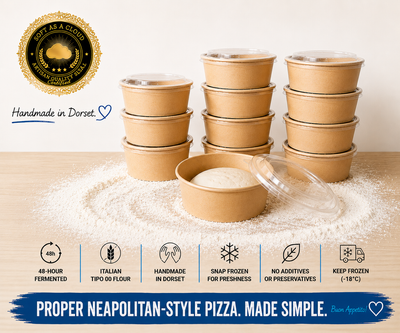 48-Hour Neapolitan-Style Pizza Dough Balls – Box of 12
£22.88
48-Hour Neapolitan-Style Pizza Dough Balls – Box of 12
£22.88
-
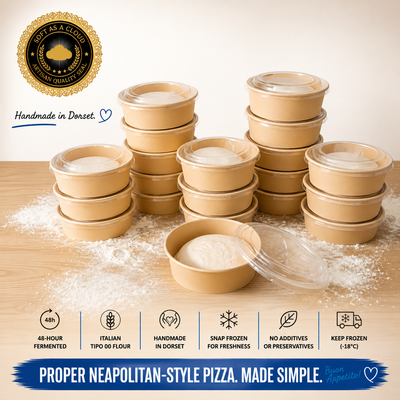 48-Hour Neapolitan-Style Pizza Dough Balls – Box of 20
£32.30
48-Hour Neapolitan-Style Pizza Dough Balls – Box of 20
£32.30
-
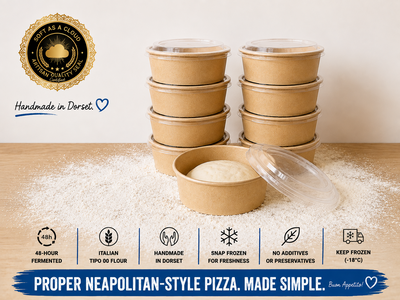 48-Hour Neapolitan-Style Pizza Dough Balls – Box of 8
£18
48-Hour Neapolitan-Style Pizza Dough Balls – Box of 8
£18
Handmade in Dorset • Free UK delivery over £50 • Free proofing pot with every dough ball