Can You Freeze Pizza Dough? How to Freeze, Thaw & Use It Properly
Can pizza dough be frozen? Yes. Learn when to freeze it, how to store dough balls, how to thaw them properly and when they are ready to stretch.
Quick answer
Yes, pizza dough can be frozen. Done properly, freezing is one of the easiest ways to keep good dough ready for pizza night without starting a fresh batch every time.
The important part is freezing the dough at the right stage, keeping it airtight, then thawing it slowly enough that the centre defrosts and the gluten has time to relax before stretching.
Does freezing pizza dough ruin it?
No. Well-made pizza dough can freeze very successfully. The dough may lose a little activity over a very long time in the freezer, but for normal home use the difference can be small when it is frozen and thawed correctly.
This is exactly why frozen dough balls are so useful: you get the convenience of dough ready in individual portions without having to mix, knead and ferment a fresh batch every time.
When should you freeze pizza dough?
For homemade dough, portioning it into individual balls before freezing is usually the most practical approach. That means you only defrost what you need.
If you are making Neapolitan-style pizza, aim for dough balls sized for the pizza you actually want to make. A Dough Dorks standard dough ball is typically 265g, which is designed for roughly one generous 12-inch pizza.
How to freeze pizza dough balls
- Portion the dough. Divide it into individual pizza-sized balls.
- Shape each ball. Give it a smooth surface so it keeps its structure.
- Protect it from air. Use a sealed food-safe container or suitable freezer-safe wrapping.
- Freeze promptly. Once portioned and protected, move it into the freezer.
- Label it. Add the freezing date so you know how long it has been stored.
How long can pizza dough stay frozen?
For best quality, use frozen pizza dough within a sensible freezer-storage period rather than forgetting it for months on end. Flavour, yeast activity and texture are generally best when the dough has not been stored excessively long.
Commercially prepared frozen dough should always be stored and used according to the instructions supplied with it.
How to thaw frozen pizza dough
The safest route is to keep the dough covered while it thaws. You can thaw it in the fridge first, or allow it to defrost in its covered proofing container at room temperature when appropriate.
The key point is that defrosted does not always mean ready to stretch. A dough ball can be thawed but still cold and tight.
For Dough Dorks dough balls, around 18–20°C is a useful handling temperature. If the dough still feels firm or keeps springing back, give it more time.
For the full process, read our guide to defrosting frozen pizza dough balls.
How do you know when thawed dough is ready?
Look for a dough ball that is soft all the way through, slightly puffy, relaxed and easy to press without the centre feeling cold or hard.
If it shrinks back aggressively while stretching, cover it and leave it for another 10–15 minutes before trying again.
Can you freeze pizza dough after fermentation?
Yes. Pizza dough is commonly frozen after fermentation and portioning. In fact, this can be especially convenient because much of the flavour development has already happened before the dough reaches the freezer.
Dough Dorks dough is slowly fermented for 48 hours before being portioned and frozen for convenience.
Can you freeze pizza dough in individual portions?
Yes — and for home pizza this is usually the easiest method. Individual portions mean less waste, quicker planning and no need to thaw a large batch when you only want one or two pizzas.
What should you avoid?
Avoid leaving dough uncovered, heating it aggressively to speed up thawing, or stretching it while the middle is still cold. Those are common reasons for a dry surface, tearing and dough that keeps shrinking back.
Frozen dough vs fresh dough
Fresh and frozen dough can both make excellent pizza. The real difference is convenience. Fresh dough requires you to plan around fermentation and storage. Frozen dough lets you keep properly portioned dough ready until pizza night.
We compare the two in more detail in our frozen vs fresh pizza dough guide.
Want ready-made frozen pizza dough balls?
If you want the fermentation and portioning done for you, browse our ready-made frozen pizza dough balls. Each standard ball is made for an easy 12-inch Neapolitan-style pizza at home.
READY-MADE • FROZEN • UK DELIVERY
Skip the mixing. Keep proper dough in your freezer.
48-hour fermented, individually proofed in their own pot and delivered frozen across the UK. Defrost, stretch, top and bake.
-
 48-Hour Neapolitan-Style Pizza Dough Balls – Box of 12
£22.88
48-Hour Neapolitan-Style Pizza Dough Balls – Box of 12
£22.88
-
 48-Hour Neapolitan-Style Pizza Dough Balls – Box of 20
£32.30
48-Hour Neapolitan-Style Pizza Dough Balls – Box of 20
£32.30
-
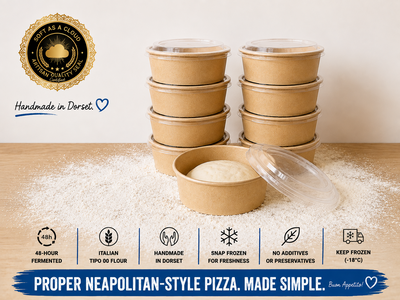 48-Hour Neapolitan-Style Pizza Dough Balls – Box of 8
£18
48-Hour Neapolitan-Style Pizza Dough Balls – Box of 8
£18
Handmade in Dorset • Free UK delivery over £50 • Free proofing pot with every dough ball